
Say goodbye to Brazilian bureaucracy: how a CPF unlocks access to government services
- há 1 dia
- 4 min de leitura
If you've ever tried to do anything official in Brazil without a CPF, you already know the feeling. You show up with your passport, your documents, your patience — and you're turned away because the system needs one number you don't have yet. That number is the CPF, and once you have it, a surprising amount of Brazil opens up.
This isn't just about taxes. It's about access.
What the CPF Actually Does for You Day to Day
The CPF (Cadastro de Pessoas Físicas) is Brazil's individual taxpayer ID, but calling it a "tax number" undersells it considerably. In practice, it's the key that connects you to almost every formal system in the country — public and private alike.
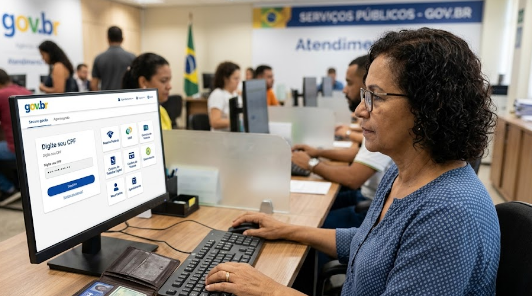
Without one, you can't register on Gov.br, Brazil's unified federal digital platform. And without Gov.br, you can't access your own official documents, apply for benefits, schedule consular appointments, check your immigration status, or interact with dozens of federal agencies — all of which have migrated to that single portal in recent years.
With a CPF, all of that changes on day one.
Gov.br: Brazil's Digital Government, All in One Place
Launched as part of Brazil's digital transformation agenda, Gov.br is the federal government's single sign-on platform. Think of it as a Brazilian equivalent of the UK's GOV.UK or Estonia's e-residency system — one login, dozens of services.
To create a Gov.br account, you need a CPF. There is no workaround. The CPF is literally the field that the registration form opens with, and everything that follows — your digital identity level, your document vault, your benefit eligibility — is anchored to that number.
Once you're registered on Gov.br with your CPF, you can:
Access your CTPS digital (digital work permit), which employers increasingly require for formal hiring
Apply for or check the status of your CRNM (the residency card for foreigners)
Schedule appointments at the Polícia Federal for immigration procedures
Retrieve official certificates and declarations from federal agencies
Access Meu INSS, Brazil's social security portal, to check contribution history or apply for benefits
Use Conecte SUS, the unified health system platform, for vaccination records, exam results, and public health service history
Apply for emergency federal benefits if they become available during your residency
If you're planning to live and work in Brazil — even temporarily — this is the infrastructure your daily life will run on.
The Healthcare Connection
Brazil's public health system, the SUS (Sistema Único de Saúde), is one of the largest universal healthcare systems in the world. Free at the point of use, it covers everything from emergency care to specialist referrals, surgeries, and medications.
To access SUS services as a registered user — rather than just as an emergency walk-in — you need a CNS (Cartão Nacional de Saúde), Brazil's national health card. The CNS is issued using your CPF as the primary identifier. Without a CPF, your access to healthcare is limited to emergency situations. With one, you can register at a local health unit (UBS), be assigned a family health team, schedule routine appointments, and access your full digital health record through Conecte SUS.
For foreigners building a life in Brazil, this is not a minor point. It's the difference between being a patient and being a visitor.
Banking, Contracts, and Everything In Between
Government access is just the beginning. The CPF is also the connector between you and Brazil's private sector infrastructure.
To open a bank account — including digital accounts like Nubank, Inter, or C6 — you need a CPF. To sign a rental lease, register a vehicle, take out insurance, receive a formal salary, file an income tax return, or enroll in a university: CPF required, every time.
Foreigners who arrive without a CPF often spend their first weeks in Brazil in a frustrating holding pattern — unable to open accounts, unable to sign contracts, unable to get the documents they need to get the other documents they need. It's a classic bureaucratic loop, and the CPF is the only thing that breaks it.
You Don't Have to Be in Brazil to Get One
This is the part most people don't know. Non-residents can apply for a CPF at Brazilian consulates abroad, through Banco do Brasil branches in certain countries, or — since 2023 — through a simplified online process for some nationalities.
The requirements are minimal: a valid passport and basic personal information. There is no residency requirement, no minimum income threshold, and no waiting period once issued. The number is yours permanently.
Getting it before you arrive — or before you begin your visa application — means you arrive with infrastructure already in place. Your first week in Brazil can be spent actually living there, not standing in line.
A Note on Document Consistency
One practical detail worth knowing: your CPF is registered under the exact legal name as it appears in your passport. Every document that follows — your CRNM, your CNS, your bank accounts, your lease agreements — should match that name exactly.
Discrepancies between documents are one of the most common sources of delay in Brazilian bureaucratic processes. A hyphenated surname here, a middle name omitted there, and suddenly two systems don't recognize you as the same person. Having your CPF locked in early, under your correct legal name, creates the baseline that everything else aligns to.
The Bottom Line
Brazil has made significant strides in digitizing its public services, and the CPF sits at the center of all of it. From federal benefits to healthcare to immigration management, the systems that govern daily life in Brazil are increasingly consolidated behind a single digital identity — and that identity starts with your CPF number.
Getting it early isn't just convenient. For anyone serious about living, working, or building something in Brazil, it's the first real step.
Ready to Get Your CPF and Navigate Brazil With Confidence?
At Simplifica Legal, we help foreigners cut through the complexity of Brazilian documentation — from CPF registration to visa applications, residency paperwork, and beyond. Our team handles the process in English, coordinates with the right authorities, and makes sure your documents are correct the first time.
You don't need to figure out the Brazilian bureaucracy alone.


Comentários